

 Tom Shepstone
Natural Gas NOW
Solar subsidies are enriching Wall Street fat cats, corporatist enterprises and fractivists with no shame in feeding at the public trough.

Shakira and Boots
Our piece last week about the tangled web of solar subsidies got a lot of attention from folks who think we’re opposed to solar. We’re not, as we observed in another recent post. We’re of the opinion, in fact, that solar and natural gas go together like Shakira and boots or Adam Levine and tattoos.
Nevertheless, when the efforts to force-feed renewables with subsidies to the exclusion of natural gas, which is both cheap and clean and is reviving rural economies, not to mention putting energy independence in reach, we have a problem. There’s new evidence of just that sort of problem.
Solar Subsidies Enrich Corporatists?
The evidence is summed up in this blog post and this one regarding the activities of SolarCity. Here are some key excerpts:
One of the biggest issues that has come up with Solar City is the fact that it claims a 30% tax credit on its solar installation which is meant for its customers. It takes away the 30% tax credit, while leasing the solar panels to its customers who may face high electricity bills and do not get any share of the subsidy. Most customers are ignorant about the complicated laws and regulations that make up the solar policies. They are happy with whatever small savings that SolarCity offers them...
Solar City was earlier criticized for inflating the installation cost of its solar panels in order to get bigger tax credits. So if a solar installation used to cost $6/watt, they would put $9/watt which meant that they could get an extra 90c/watt or almost 50% more subsidies than they were entitled to.
This same blog post quotes the Wall Street Journal to put things in perspective:
One of the largest solar-system installers in the U.S., SolarCity Corp., uses the LLC strategy and currently buys a majority of its solar panels from the low-cost Chinese supplier, Yingli…
Just last week, the U.S. International Trade Commission found the Chinese solar industry guilty of “dumping” solar panels in the U.S. Tariffs are likely to be levied against Yingli and others…Washington gives tax breaks to Wall Street to fund LLCs that buy solar panels from the Chinese to “help” the American solar industry, while the ITC threatens to levy a tariff on those solar panels, which would raise the price of solar energy to U.S. homeowners. In short, Wall Street pockets the money and consumers get higher solar-energy prices.
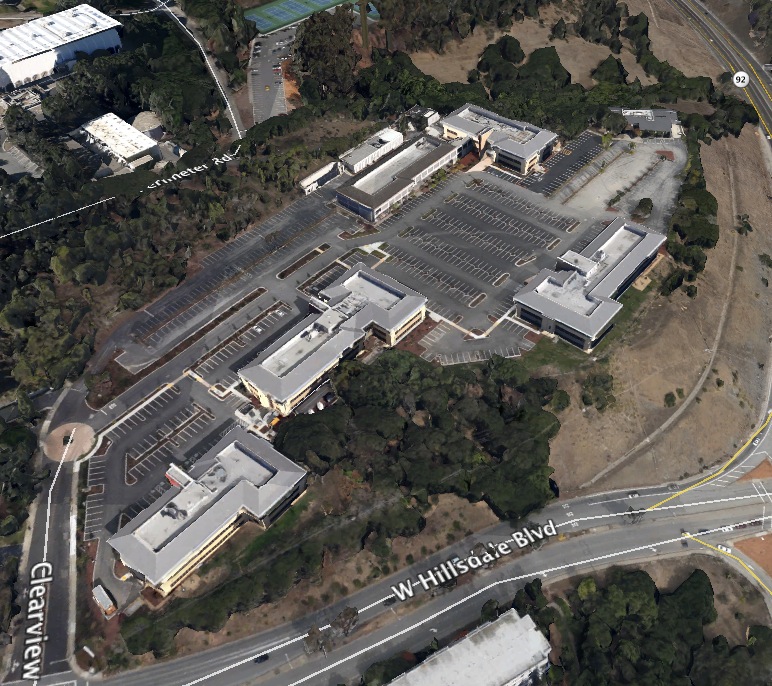
SolarCity Headquarters, San Mateo County, CA
Consumers, in other words, would be better off in many cases without the subsidies, which are only distorting the market and preventing the kind of innovation in the combination of energies that could yield real progress.
They’re also enriching Wall Street corporatists, of course. A much more in-depth report was carried by Forbes last year and here are still more excerpts from that piece:
The Treasury Department has dished out more than $18 billion in cash grants to renewable energy developers under Section 1603 of the American Recovery and Reinvestment Act of 2009. More than $4.3 billion of that has gone to solar projects.
This encourages potential abuse of taxpayer funds, since the higher the prices that solar developers report to Treasury, the more cash they can rake in.
The cash doesn’t just flow to solar installers. Those companies, including SolarCity, are unprofitable and rely on the likes of U.S. Bancorp and Google to fund their solar buildouts. If those partners are putting up the capital, you can be sure they are the ones enjoying the profits — at taxpayer expense…
Since SolarCity has no profits for the government to tax (in the past three quarters it lost $95 million on sales of $117 million), the Investment Tax Credit is entirely useless to the company. That’s why it partners with big investors with low costs of capital and plenty of taxable profits to shelter…
SolarCity says that since its inception in 2006 it has raised more than $3 billion to finance its more than 500 megawatts of solar projects. More than $700 million of that capital has come from investors injecting capital into off-balance-sheet funds that they set up with SolarCity. All told, SolarCity and its outside investors have likely generated upwards of $900 million in grants and tax credits…
The amount that SolarCity has generated in subsidies is far more than the $500 million the Department of Energy loaned to Solyndra. But at least Solyndra paid back about $135 million of that before it went belly up.
Obviously, these are merely allegations and SolarCity has a somewhat different view. We take no view on their guilt or innocence. Regardless, the abuse of solar subsidies is starting to get the attention it deserves. More importantly, if you read the Forbes piece you’ll see some good suggestions about how to create more parity by designing solar subsidies (if we need them and I suggest we don’t) that at least rely upon consumer savings rather than government largesse for payout.
Solar Subsidies Go to Those Who Don’t Need Them to Buy Bragging Rights
The solar subsidies grabbed by SolarCity are only one side of the abuse, however. There is another. We have talked before about actor Mark Ruffalo grabbing taxpayer money to claim the moral high ground for doing his solar system when he’s already worth an estimated $20 million.
That’s bad enough, but there at least one other case that rankles–that of Delaware Riverkeeper Maya van Rossum, the William Penn Foundation’s hired dirty trickster who plays the role of river queen to fawning media unwilling to ask her tough questions; the same media ignoring the plight of landowners impacted by her actions as Upper Delaware PovertyKeeper.

Maya and her husband, David Wood, live in trendy Radnor, Delaware County, Pennsylvania (average household income of $160,544, median home value of $626,600) where she grew up. Maya is undeniably a true believer and, as might be expected, preaches an anti-fossil fuels message which, of course, she feels obligated to put on public display. So, she and her husband proceeded to install solar and geothermal energy systems on their property. She got more fawning coverage for this, of course, and here’s what the article, titled Being Energy Efficient is A Pocketbook Issue, Too tells us (emphasis added):
Bryn Mawr resident David Wood said his family’s decision to install energy-producing solar panels and a geothermal heating and cooling system was the easiest environmental decision they ever made.
Why? Because he and his wife Maya van Rossum expect that between the two systems their house will be completely energy independent, and that the cost of the two will pay itself off in an estimated five years and last twenty-five years.
The times when the house is empty and the sun beating down on the panels is creating energy, the family will sell the produced electricity to PECO. When they are home they will be buying it from the energy supplier.
They also have the option of selling the “alternative energy credits” they receive every year, another way the systems can bring in even more money.
“From a dollar and cents standpoint it doesn’t make any sense not to do it,” Wood said.
With state subsidies and tax credits, the cost of installing both the solar panels and the geothermal unit hovers around $50,000. The cost of the solar panels alone without any subsidies or credits would have been $75,000, Wood said.
Notice the self-contradictory message. First, we hear the two systems make Maya and husband “energy independent,” but two sentences later we learn they’ll still need energy from PECO when they’re home, meaning they’re relying upon other energy services to fill the gaps during peak periods. That’s exactly how we suggest it should work, of course, with renewables providing energy where they can do so efficiently, but using natural gas as the foundation to ensure energy when the sun doesn’t shine. What the article doesn’t tell us is that her neighborhood is served by both natural gas and electricity made from natural gas, which do that for her.
The bigger problem with the article and headline, though, is the false suggestion her systems make economic sense at the scale on which she’s deployed them. They don’t because we know from husband David they received a minimum of a $25,000 and probably closer to $50,000 in subsidies (you aren’t eligible unless your investing $25,000 or more for a system and there are two involved here). This means other ratepayers and taxpayers paid for the bragging rights and “efficiencies” Maya and David got out of their projects and they paid a heck of lot. There was no payoff for them.
Sending solar subsidies to Radnor, Mark Ruffalo, Time-Warner and other places and people who don’t need them, which is where they’re going, is like giving Bill Gates an I-Pad or free soccer lessons to the Germans. It isn’t necessary and it only gives renewables a bad name.



This is but the visible tip of the iceberg. There is growing recognition in the rational environmental community that solar and wind need to undergo the same environmental impact scrutiny as non-politically correct enery sources such as natural gas. A quick search of the internet concerning bird kills at solar electric generating plants would normally ignite a fire storm of protest by bird loving environmentalists. It has been all but ignored by the main stream media. The verified reports of birds being burned in mid-air in fly-overs of solar plants, grebes trapped when landing on the mirrors believing that they are landing on water, and eagle and bat deaths from windmills illustrate that this isn’t really “about the science”. It is about ideology and political correctness. Neither of which should have any place at the table.
I think you’re spot on. When renewables are put to the test like natural gas and have to survive without force-feeding, they’ll do much better because they’ll be on a firmer foundation of innovation.
The Chemicals involed with Solar Panels are incredible . How does the boogieman from 6500 feet bellow migrate to an aquafer while rainwater does not do the same with Solar Panels ? Arsenic and other heavy metals are dipping off roofs to the aqaufer when you install solar panels . Many places these elements naturallly occur in the ground. With Fracking you have multilayers of casings weight about 3 million pounds per fracked well . The problem is people get whipped up with emotion while not weighting the risks everything imposes on our lives vs the benefits.