

 Tom Shepstone
Natural Gas NOW
….
….
Wind energy should be part of our energy portfolio, but it shouldn’t be lost on supporters that it cannot work without natural gas or some other foundation.
There are some things we’ve repeatedly noted here about the whole renewables versus natural gas debate. First, there is every evidence renewables such as wind energy are growing together with shale are growing together, especially in places such as Texas. Secondly, wind energy, which I have supported for many years and even consulted upon, will make its biggest gains when it is forced to operate in a world where massive subsidies aren’t its economic foundation; when it’s forced to compete on a level playing field. Finally, wind energy is, by its nature, must be a complementary source of power and not a primary one, as the wind doesn’t blow on schedule and natural gas or some other energy source without that sort of limitation is a pre-requisite to meet the needs of consumers who must have reliable energy.
We’ve used Energy Information Administration (EIA) data to help make these points and it has just come with another post, yet again illustrating wind energy, because it’s so variable, must come with a partner in natural gas, unless we want to depend on coal, oil or nuclear sources, which I’m happy to say should also be part of the mix, but about which many people are skeptical.
The EIA article appeared in Today In Energy a few days ago and addressed West Coast wind patterns and how they have lead to below-normal wind generation capacity factors. No energy source operates at full capacity, which is why all those wild capacity numbers thrown around by intellectually dishonest renewables advocates are meaningless.
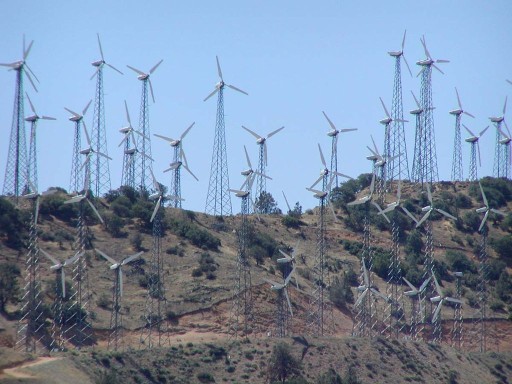
California Wind Farm at Tehachapi Pass – 50 square miles of wind parks are planned in region
Unless, you know the actual generation compared to rated capacity (the capacity factor), you know nothing. Combined cycle natural gas power plants achieved an average capacity factor of 47.8% for 2014, while wind energy was at 33.9%. This means natural gas is 41% more efficient than wind energy insofar as it’s ability to deliver on rated capacity an only about third of all wind capacity we hear is being installed from time to time, is actually generating power.
The bigger problem, though, is the variability and this is what the most recent EIA article is about. Here are some charts and excerpts:
A drop in average wind speeds in the western United States during early 2015 led to reduced generation from wind plants in California, Oregon, and Washington. As a result, wind plant utilization rates, also known as plant capacity factors, were consistently below the previous five-year average during the first five months of 2015, according to the latest data available.
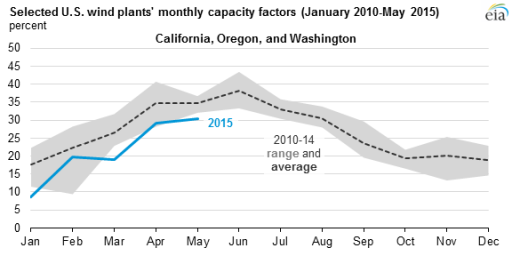
Wind plant generation variability occurs over different time scales, from subhourly to seasonally and even annually, reflecting variations in wind speeds. Unexpected drops in output may require grid operators to schedule other sources of power on short notice. Furthermore, because the federal tax credit for utility-scale wind energy is based on generation volumes, lower wind speeds mean reduced tax credits.
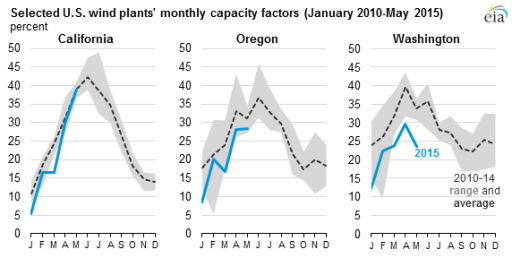
Capacity factors for wind turbines in Oregon and Washington vary much more by month than for wind turbines in California, largely as a result of California’s favorable climate and geography. In the summer, ocean-cooled air in California interacts with the warmer mountains nearby to create a relatively reliable and well-timed land-sea breeze air circulation pattern. California’s wind resources and generator output tends to peak during the summer at a time when electricity demand in the state is also relatively high.
Notice that, even though California is an ideal state in many respects for wind energy, those windmills can produce as little as 5% of their rated capacity in some months, meaning natural gas or some other source is essential as the mainstay with wind energy serving to help address peak period needs. One cannot hope to do wind energy on any meaningful scale and not have that mainstay available. The only question is what it should be. Coal? Nuclear? Or, clean burning natural gas, the production of which is already stimulating rural economies in ways one could only dream about? The answer could not be more obvious.

Isn’t there another wind and solar “hidden” subsidy in that the existing utility companies bear the burden of building out and maintaining the transmission line distribution system? Do alternatives “ride free” to get to your home?
Exactly!
Unfortunately wind turbines have their own negative impacts; from killing off endangered bats and birds to the need to destroy existing forests and vistas plus all the ancillary infrastructure like roads and transmission lines which have issues with erosion, maintenance and have become havens for invasive species.
California Wind Farm at Tehachapi Pass – 50 square miles of wind parks are planned in region.
Wow! 50 square miles of a bird killing, fracktivist’s dream come true.
Pingback: Gone With The Wind: Wind Energy Runs Dry?