

 Tom Shepstone
Shepstone Management Company, Inc.
Two major stories highlighting our energy future illustrate a fracking reality even worse than most fractivists thought, but better for the rest of us.
Readers are always bringing wonderful stories to my attention and two contrasting articles I received recently perfectly illustrate what I call the fracking reality. One looks the future of shale energy compared to renewables and observes what so many fractivists cannot bring themselves to admit; a renewable energy future is not possible, at all, without natural gas, which is best produced from shale resources. The second observes what a difference this same shale energy has made in reducing CO2 emissions in one state – my state – of Pennsylvania and what a beautiful thing it has been.

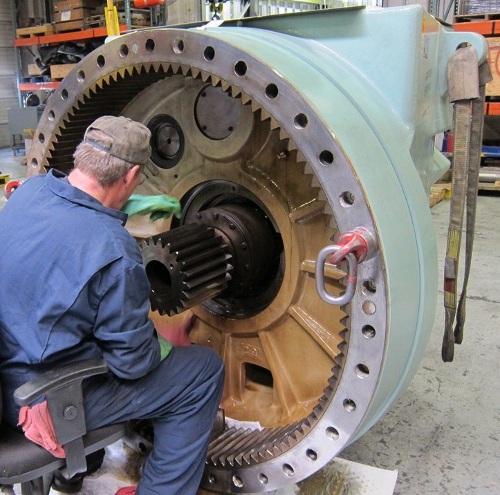
Modern blast furnace of the type used to produce steel wind towers – powered by natural gas produced from fracking or some other fossil fuel
The first story is by Mark P. Mills, a senior fellow at the fabulous Manhattan Institute. His piece is entitled “The Future Of American Shale: Political & Energy Realities” and appears in Real Clear Energy. It’s a really excellent perspective on shale energy and well worth reading in its entirety, but what especially got my attention were these ending words:
And, neither subsidies nor any of the technologies Ignatius described will eliminate the use of hydrocarbons.
In fact, just expanding solar energy will require consuming oil, coal and natural gas associated with producing all of the associated materials. For example, reaching a goal where wind supplies 25% of global electricity demand (which equals an 8% share of all energy use) would entail burning 600 million tons of coal to produce the 450 millions tons of steel needed for those wind turbines, along with 600 million barrels of oil needed to fabricate the 20 million tons of fiber-composite turbine blades.
A matching build-out of solar (25% of global electricity) would require another nearly 600 million tons of coal to produce the needed 200 million tons of steel and aluminum (the latter is particularly energy-intensive), along with burning natural gas equal to 1 billion barrels-of-oil to produce the 200 million tons of glass needed. If built out over a single decade, it would using 75% of annual world glass production each year.
Such are the realities that tech revolutions face in the real world of energy.
The links provided by Mills provide more details on this fracking reality, including the following (emphasis added):
A 5-MW turbine has three roughly 60-meter-long airfoils, each weighingabout 15 metric tons. They have light balsa or foam cores and outer laminations made mostly from glass-fiber-reinforced epoxy or polyester resins. The glass is made by melting silicon dioxide and other mineral oxides in furnaces fired by natural gas. The resins begin with ethylene derived from light hydrocarbons, most commonly the products of naphtha cracking, liquefied petroleum gas, or the ethane in natural gas.
The final fiber-reinforced composite embodies on the order of 170 GJ/t. Therefore, to get 2.5 TW of installed wind power by 2030, we would need an aggregate rotor mass of about 23 million metric tons, incorporating the equivalent of about 90 million metric tons of crude oil. And when all is in place, the entire structure must be waterproofed with resins whose synthesis starts with ethylene. Another required oil product is lubricant, for the turbine gearboxes, which has to be changed periodically during the machine’s two-decade lifetime.
Then, there is this chart relating to the needs associated with solar power going forward:

Notice all glass, plastic, concrete and steel involved in this instance? Well, all of that is produced using natural gas or oil produced by fracking, of course.
That is the fracking reality, but the benefits extend far further, as a terrific piece by Jude Clemente in Forbes demonstrates. Clemente was a guest on Shale Gas News recently and is one of the most knowledgeable writers out there with respect to energy issues. This article, entitled “Fracking And Natural Gas Have Cut Pennsylvania’s CO2 Emissions 30%” focuses on those other benefits and, as the reader who brought it to my attention observed, the “win, win, win” involved. Here’s a tiny bit of what Clemente had to offer (emphasis added):
Thanks to the mighty Marcellus shale play, Pennsylvania’s natural gas production has boomed nearly 30-fold since 2005…
Pennsylvania’s natural gas boom has had the measurable benefit of lowering total CO2 emissions in the state’s power sector by about 30%, a very important development because it’s absolute emissions that are required to tackle Climate Change. As for unit of electricity produced, Pennsylvania has evolved from emitting about 1,300 pounds of CO2 per MWh in 2005 to just 910 pounds today, another example of why anti-fracking positions make little environmental sense.
This 30% reduction in CO2 emissions per MWh over 10 years is actually better progress than what has been experienced in California’s power market, continually cited as EPA’s exemplar for other states to follow (here). Since California first installed its Renewable Portfolio Standard in 2003, the state’s CO2 per MWh has surprisingly stayed at around 630 pounds, even increasing in some years (see EIA data, here). And Pennsylvania has tremendous room for natural gas growth: gas is only about 30% of Pennsylvania’s power generation, compared to over 60% in California.
So, despite not being blessed with the great sunshine and wind areas that California has, Pennsylvania has been lowering its CO2 emissions rate faster with shale gas. And California: has power rates that are about 40% higher, has a very expensive regulation of 50% RPS by 2030, and is forced to import 33% of its power. And also in stark contrast: California imports over 90% of its natural gas, while Pennsylvania supplies the clean energy source to surrounding states, like New York (here).
What’s not to like about this fracking reality? Well, quite a bit if you’re a fractivist ideologically blinded to common sense, logic and science, but for the rest of us it is indeed a case of winning across the board with huge rural economic development benefits, high returns from farmland and open space with little land disturbance, cleaner energy, lowered emissions and a platform from which to also do renewable energy without the outrageous subsidies by ratepayers and taxpayers.

New York City energy use – the hotter the color, the more energy use
Moreover, as Clemente points out “Other states, like New York, that love to use fracked gas but won’t produce it itself, should be thanking Pennsylvania for producing and exporting so much” because they cannot possibly hope to meet their Clean Power Plan obligations (40-50% total emissions reductions by 2030 in new York’s case) without natural gas produced by fracking.
That’s the fracking reality again and, of course, if New York is not going to produce the gas itself, it must import it from Pennsylvania, which means much more pipeline capacity than now exists. New York doesn’t have the luxury of denying both fracking and pipelines – not in the end. The cowardly Cuomo may avoid making the decision himself and let FERC take the heat, but the Constitution Pipeline will be built because it must be built. New York has no choice but to use more natural gas and it will have to piped in if New York won’t allow it to be developed there. Talk about a win-win-win!

https://mobile.twitter.com/algore/status/721323075346817025
Well I guess Al Gore hasn’t gotten the memo yet or the news for that matter. As he seems super proud of his daughters recent op Ed on Constitution Fracked gas pipe. Really strange as I seem to remember climate change and reducing carbon dioxide emissions were a topic near and dear to his heart. Sounds like maybe he caught the frack fever?
In other news currently on the Democratic side of things Hillary Clinton has received a few million more votes than feel the Bern ban fracking plus shut down nuclear Sanders. That’s interesting as fractivist revolution leader Josh fox has said a vote for Hillary is a vote for fracking.
http://www.salon.com/2016/04/16/a_vote_for_hillary_is_a_vote_for_fracking_josh_fox_talks_bernie_sanders_climate_change_and_the_political_revolution_we_need/