

 Tom Shepstone
Shepstone Management Company, Inc.
.
…
Let’s stop pretending Gov. Tom Wolf is anything but another ideologue out to destroy the PA natural gas industry and everything good that goes with it.
We knew it was going to be bad when industrialist turned environmental pretender Tom Steyer threw a wad of green money at the Pennsylvania gubernatorial election last year to elect Tom Wolf, but one always has hope a smart man will rise above the cronyism that defines American politics these days to do the right thing.
As it turns out, our cynicism was justified and our hope was foolishness. Tom Wolf is out to destroy the natural gas industry on behalf of his special interest political supporters. The latest Wolf attack, on top of his ludicrous highest-in-the-land severance tax proposal, is a set of revisions to Pennsylvania’s Chapter 78 and 78a regulations of oil and gas wells that would do little or nothing to improve health and safety, but still put a wet blanket over the PA natural gas industry that has done so much for the Commonwealth.
Chapter 78 and its companion Chapter 78a of the Pennsylvania Code of Regulations regulate the PA natural gas and oil industry. An update of these regulations was started under Governor Tom Corbett and had already undergone extensive hearings, review and comment over several years, but was never quite finished. So, naturally, Tom Wolf’s humorless know-it-all DEP Secretary, John Quigley, decided it needed to be redone yet again. His department released a new version earlier this month and his proposed changes, which are meaningless but expensive, are clearly intended to add costs, frustrate and slow down drilling for no reason other than his and his boss’s ideological opposition.

Notropis dorsalis (“Bigmouth shiner”) found in Great Lakes, Hudson Bay and Mississippi River basins from Michigan to Manitoba, Canada and from eastern Illinois to Platte River system in Wyoming and Colorado with additional populations in western New York and Pennsylvania, West Virginia and Ohio, but listed on PNDI as “potentially threatened.”
The new final draft of the regulations is somewhat hard to follow because it has now been split into two sections; Chapter 78 for Conventional Wells and and Chapter 78a (beginning on page 123) for Unconventional Wells. Shale gas wells are, of course, the large majority today and should logically be labelled “conventional” by any rule of common sense but in the world of nonsensical government the rule is “once unconventional, always unconventional.”
If that were the only problem (and the language problem began with Corbett), this update wouldn’t be one, but it’s just the beginning. It’s easy to spot what the perpetually unsmiling Quigley added; it’s all BOLD, UNDERLINED, AND CAPITALIZED and text that is [ bold, bracketed, and strikethrough ] shows language that was deleted in the draft final version. Other bold, underlined and bracketed text relates to changes made pre-Quigley. A quick look at just a few of the changes illustrates the harassing and unproductive nature of what Quigley is trying to do.
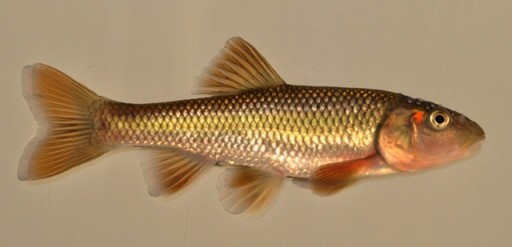
Nocomis biguttatus (“Hornyhead Chub”) – Ranges from Wyoming, North Dakota, and South Dakota, east to the Hudson River drainage and south to Oklahoma. Primary value is as bait fish. Classified by PNDI as an “Animal that could become endangered or threatened in the future.”
The definitions used in the regulations now include the term “critical communities,” one of those Orwellian terms favored by government as a means of extending the written word to whatever a bureaucrat or litigating environmentalist wants it to mean. Drillers are now supposed to identify any “location that will impact other critical communities” and these will become excuses for subsequent delays or denials. The definition, therefore, is even more “critical” and includes the following (emphasis added):
(i) SPECIES OF SPECIAL CONCERN IDENTIFIED ON A PNDI RECEIPT, INCLUDING THE FOLLOWING:
(a) PLANT OR ANIMAL SPECIES IN A PROPOSED STATUS CATEGORIZED AS PROPOSED ENDANGERED, PROPOSED THREATENED, PROPOSED RARE, OR CANDIDATE.
(b) PLANT OR ANIMAL SPECIES THAT ARE CLASSIFIED AS RARE OR TENTATIVELY UNDETERMINED.
This language is vague enough for a whole herd of of whitetails to run through it without even pausing to look to left or right. PNDI stands for Pennsylvania Natural Diversity Index and it is one of those levers NIMBYs and environmental special interests routinely use to challenge development of any kind. States such as Pennsylvania and New York used these lists to effectively expand the official list of threatened or endangered species at will.
See a minnow and, presto, you too can propose a new species be added and stop a project, not by proving anything, but merely by raising questions. The tyranny of the whole PNDI system (and others like it) is insidious and a perfect example of how regulators, and the special interests suing them, are able to manipulate, control and expand government for their own purposes of stopping others from doing things.
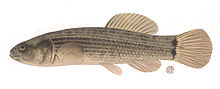
Umbra pygmaea (“Easter Mudminnow”) – Native to eastern North America from New York, south to Florida and west to Georgia. Classified by PNDI as an “Animal that could become endangered or threatened in the future.”
A closely related Orwellian exercise in these regulations is the designation of something called a “Public Resource Agency.” Here’s what is proposed (bolded represents new additions):
PUBLIC RESOURCE AGENCY — AN ENTITY RESPONSIBLE FOR MANAGING A PUBLIC RESOURCE IDENTIFIED IN § 78a(f)(1) (RELATING TO APPLICATION REQUIREMENTS) INCLUDING, PENNSYLVANIA DEPARTMENT OF CONSERVATION AND NATURAL RESOURCES, PENNSYLVANIA FISH AND BOAT COMMISSION, PENNSYLVANIA GAME COMMISSION, UNITED STATES FISH AND WILDLIFE SERVICE, UNITED STATES NATIONAL PARK SERVICE, UNITED STATES ARMY CORPS OF ENGINEERS, UNITED STATES FOREST SERVICE, WATER PURVEYORS, COUNTIES, MUNICIPALITIES, PLAYGROUND OWNERS AND SCHOOL DISTRICTS.
These designations are extremely important because the regulations also say this (emphasis added):
IF ANY POTENTIAL IMPACT IS IDENTIFIED IN THE PNDI RECEIPT TO THREATENED OR ENDANGERED SPECIES, THE APPLICANT SHALL DEMONSTRATE DEMONSTRATION OF HOW THE IMPACT WILL BE AVOIDED OR MINIMIZED AND MITIGATED IN ACCORDANCE WITH STATE AND FEDERAL LAWS PERTAINING TO THE PROTECTION OF THREATENED OR ENDANGERED SPECIES AND CRITICAL HABITAT. THE APPLICANT SHALL PROVIDE WRITTEN DOCUMENTATION TO THE DEPARTMENT SUPPORTING THIS DEMONSTRATION, INCLUDING ANY AVOIDANCE/MITIGATION PLAN, CLEARANCE LETTER, DETERMINATION OR OTHER CORRESPONDENCE RESOLVING THE POTENTIAL SPECIES IMPACT WITH THE APPLICABLE PUBLIC RESOURCE AGENCY.
“Public resource agencies” will, in other words, have veto power over the PA natural gas industry if they can just find that minnow. They have to be notified whenever a driller proposes to develop a well that may “impact a public resource” which, as we noted above, means a “location that will impact other critical communities.” And, this power will now go to the National Park Service and playground owners if they want to pretend they’re aggrieved. Moreover, the definition of “playground” is:
PLAYGROUND – AN OUTDOOR AREA PROVIDED TO THE GENERAL PUBLIC FOR RECREATIONAL PURPOSES. THE TERM INCLUDES COMMUNITY-OPERATED RECREATIONAL FACILITIES.
Throw up some monkey bars, invite the neighbors and you’re ready for monkey business if you’re a NIMBY or fractivist – it’s that simple – you, too, can claim you’re worried about that “critical community” of dandelions the kids like to admire might be impacted and demand the PA natural gas industry kowtow to your whims.
This sloppy draftsmanship is intentional and there’s a lot more of it to be discussed (Part II coming) but the key thing is this; these changes aren’t going to have one iota of impact on public health or safety and they’re not going to give an additional protection to any species because the environmental impacts of PA natural gas drilling are positive, not negative. Why? Because, the industry has made it economical to hold onto open space and even add more of it to the public domain. Additionally, the industry, by stimulating rural economies, has enriched the capabilities of communities to protect resources and resolve existing environmental problems. It has also brought much attention to the fact Pennsylvania lacks water well regulations, a fact which, pre-drilling has led to some horrendous water quality problems that needed that attention.
No, these Chapter 78 revisions are an embarrassment – a stab at the heart of the PA natural gas industry that, in combination with the Wolf severance tax attack, represent a declaration of war against the industry by a governor indebted to George Soros wanna-be Tom Steyer and a DEP Secretary who sees himself as an environmental Darth Vader like warrior and should have never been confirmed by the Pennsylvania Senate.

PA is about to find out how badly it sucks to be like NY- where a handful of super rich snobs own the state capital and they make their own rules. any laws they don’t like are simply ignored.
oh well, the PA northern tier had a good 8 year run. billions of dollars in private and public income, jobs galore, taxes lowered, property values way up, roads and bridges far better then ever.
the NY side of the border? abjectly screwed- by the arrogant lying sadist that thinks this state is his own personal fiefdom..
Go Gov. Wolf !!
Poor BILL . The sad part is we were planning on going to a rally today about seceding to Pa.?
Now, maybe not? I wonder if our votes would help you shitcan Wolfe? He likely will resist any eforts for our cause?
Oh well back to the drawing boaed. Maybe we can get a recll effort going for Quomo? Maybe you folks can do the same with Wolfe?
Pingback: Another Tom Wolf Attack on PA Natural Gas - Part II