

 Nick Grealy
Administrator of NaturalGas2.0, NoHotAir and ShaleGasInfo Blogs
The Lancashire shale debate demonstrates the power of a tiny irrational fractivist minority to influence public policy to the detriment of everyone else.
Those who don’t have English as a first language, or even younger readers, may be unaware of the background of a particular cliché that they may have heard but don’t understand today.
Selling, carrying, bringing, or taking coal(s) to Newcastle is an idiom of British origin describing a foolhardy or pointless action.
It refers to the fact that historically, the economy of Newcastle upon Tyne in north-eastern England was heavily dependent on the distribution and sale of coal
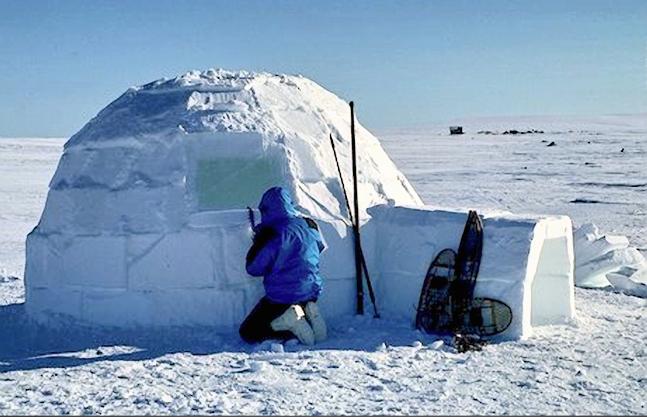
Variations include selling ice to the Eskimos or sand to the Saudis. Here’s not only a newly minted cliché, but also a grand finalist in the already crowded sweepstakes of Maddest Idea Ever in the History of Mad Ideas for UK Energy.
Selling Shale Gas to Lancashire.
Let’s frame the problem:
- A group of people whose number was described as “negligible” by Planning Officer Perigo in his testimony to the Lancashire County Council planning committee and who had won 11% of the vote in an election on the subject barely six weeks earlier, are considered by much of the press, and many investors, as a demonstration of permanent gridlock that will kill off a project that has the strongest support at all levels of national government.
- The reality behind the fear is obsessing over the landscape will be industrialized by subjecting a few hundred, if that, people to an extra truck about every 75 minutes for a period that might be as long as a year.
- Even worse, the residents of one house (but a very big house) could be compelled, in an un-democratic process allegedly aligned with the interests of the 65 million UK people who are the sovereign property owners of UK oil and gas resources, to endure a night time noise level lower than their refrigerator.
- Evidence of earthquakes, poisoning and dead babies put forward to the Planning Committee was thoroughly rejected on scientific grounds by the way. That wasn’t controversial enough to be revealed by most of the UK press, local, broadcast, social or national dead tree media alike. The story, as ever in the UK, isn’t about hope, but about fear.
In other words, let’s call the whole thing off. But we still have a problem for greens and nimbys alike. Let’s pretend, somewhat against cliché, that Lancashire electricity could in fact be entirely supplied by solar. If that’s a big ask, how about a super grid of wind turbines. Neither one of these alternatives industrialize the landscape apparently, since construction and maintenance would all be horse drawn by animals with organic hemp sacks tied to hooves to lessen noise.
Electricity production is only a quarter or so of UK gas demand though, so assuming power is 100% decarbonized, meeting the half of demand that almost everyone in Lancashire uses to heat their homes, or the quarter that keeps fertilizer plants like Growhow or the chemical plants of Ineos in business also needs to be taken on board.
Luckily there is a solution. As usual in the UK, when locals are found incapable of making a rational decision in their own self-interest, foreign investors will do it for them. If Lancashire folks don’t want to access their own gas, and have such a booming economy that they can afford to turn up their noses, someone else will sell them theirs. Not only that, they can arrange local delivery as Port Meridian propose.
The Port Meridian deepwater port is located in Morecambe Bay offshore Barrow in Furness – and is based on Höegh LNG’s proprietary floating storage and regasification vessel technology (FSRU). The vessel will receive Liquefied Natural Gas (LNG) offshore, store the LNG, regasify the LNG onboard and send the gas to shore via a subsea pipeline to an interconnection with National Grid.
The gas source is already agreed. With over half of US gas produced from shale, this LNG is shale gas. It’s just not shale gas that will disturb anyone, since the planning committees have already given their support:
Onshore elements of the projects have been granted planning permission by the local planning authority (Barrow Borough Council) under the Town and Country Planning Act, 1990;
All major offshore permits have been obtained, approved ‘in principle’, or are in the final stages of being obtained.
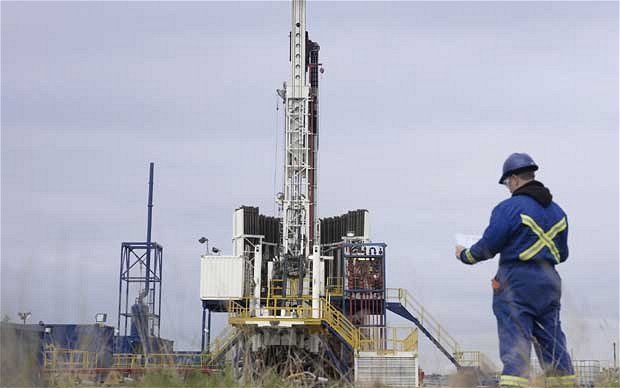
A Cuadrilla drilling rig.
The gas is provided by Eon. Not British license holders in the area like Cuadrilla, Aurora, Igas, Osprey etc.
E.ON SE E.ON-Platz 1 40479 Düsseldorf Germany
Meridian LNG Holdings Corp. (Meridian LNG) and E.ON Global Commodities SE (EGC), the trading unit of E.ON SE, have entered into a 20-year gas sales agreement under which EGC has agreed to purchase up to two million tons of regasified LNG per year (2.0 mtpa) from Meridian LNG at market-reflective conditions to be delivered at UK’s National Balancing Point. Meridian LNG intends to deliver such LNG through its planned Port Meridian import and regasification terminal.
The gas itself is backing up in Louisiana already, but if you don’t like actual shale, perhaps they can arrange delivery from other LNG suppliers desperate to provide gas in the market. Even from as far away as Australia.
Meridian LNG has previously signed a 20-year, 2.0 mtpa liquefaction term sheet with Magnolia LNG LLC (Magnolia LNG), the owners of the proposed Magnolia LNG facility in Lake Charles, LA, and anticipates entering into a binding liquefaction tolling capacity agreement shortly. The tolling agreement together with related supply and pipeline agreements is expected to provide 2.0 mtpa of LNG to Meridian LNG from early 2019. Magnolia LNG is a wholly owned subsidiary of Liquefied Natural Gas Limited (ASX: LNG), based in Perth, Western Australia.
By the way, if you think that LNG is low carbon, think again. Freezing gas in balmy Louisiana or Qatar or supporting democracy in Equatorial Guinea uses a lot of energy. Transporting it thousands of miles adds more, even when ships use the gas instead of oil. There is of course, no possible carbon impact of building the ships in Korea either. Finally, when it gets to the UK, it has to be reheated again. New studies propose that LNG into the UK may have a carbon footprint up to 30% higher than UK produced shale gas.
Frack Free Fylde are allies of Friends of the Earth, they of the Shale Gas, Not Here, Not Anywhere mantra. However, FFF is OK with permanent project 37KM away.
It is proposed that a permanently moored Floating Storage Regasification Unit (FSRU) will be installed around 37 kilometres offshore of the coastline of Fylde, North West England
Some see Frack Free Fylde as rich nimbys. Not that rich it seems since no one there can afford a boat.

Those who don’t have English as a first language, or even younger readers, may be unaware of the background of a particular cliché that they may have heard but don’t understand today. – here is Nick Grealy giving a rendition of it in Blackpool http://ow.ly/RvzKV Nice!
Funny how much we have in common Nick. We have NG right here but we have those who insist on importing it?