

 Steve Fountain
Freelance Journalist and Marketing Consultant
The fossil fuels phobia of some newspapers is more than puzzling, given the heavy use of fossil fuels throughout the life cycle of a newspaper.
I never walked the hallowed halls of the New York Times or Washington Post during my 20 years in the journalism field. As an editor with a small Gannett-owned site, I adversely affected my career path when, upon getting off a bus and seeing our company’s new glass-faced Virginia corporate office, I commented about that old saying about people who live in glass houses.
I offer this for perspective. I walked in the world of newspaper elite, but I wasn’t ever one of them. If the big papers are the major leagues, I made it to AA ball.
In my four-plus years as a civilian, I have been blessed with a perspective shift from a producer of news to a consumer of news. As such, the hypocrisy of my former world has become clearer.
Fossil Fuels Hypocrisy
An example of this hypocrisy was offered when, on February 2, 2014, the Los Angeles Times — my former hometown paper — carried an editorial (an unsigned opinion piece representing the view of the paper) on the Keystone Pipeline. Here is part of what the editorial stated:
“And even if the Canadian tar sands extraction would not be, by itself, a devastating new source of greenhouse gases, the Keystone XL would be a sorry symbol of the world’s continued reliance on fossil fuels.”
Newspapers aligned with the environmentalist world view that any use of natural resources is inherently destructive, polluting and downright naughty find an amazing exemption when it comes to the fact the newspaper industry relies on ink printed on paper to make money.
Paper that comes from trees.
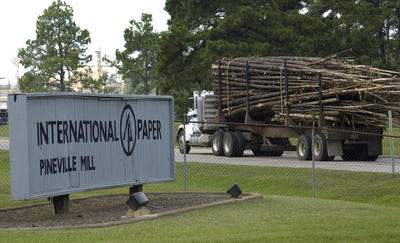
Trees that are cut down, transported by trucks powered by — gasp! — gas or diesel-fueled engines to a plant that uses energy produced by natural gas, coal or nuclear power to turn the trees into pulp and then into paper.
The paper is then transported by greenhouse-gas-producing trains or trucks to a printing plant that, again, uses energy produced by natural gas, coal or nuclear power, to run its press so that ink can be printed on paper. Natural gas heat is also often used to dry the heat onto the paper in the case of magazines by the way (see Goss M-300 press below, one example).

That paper gets sold and, after a day’s use, finds itself in a recycling bin or trash can. Which is then picked up by gas or diesel-fueled trucks to be taken to the appropriate place.
Newsprint is a newspaper’s second-highest expense behind labor.
Yet, we never see a newspaper oppose the cutting of trees as a symbol of the newspaper industry’s continued reliance on trees.
Nor do we see too many newspapers equipping their carriers — the non-living-wage workers who deliver newspapers to houses and businesses — with electric cars.

Newspapers Are Sticking with Fossil Fuels Themselves
Perhaps the greatest hypocrisy is that newspapers, more than any other long-standing industry, are already positioned to eliminate printed editions through electronic delivery to computers, tablets and other devices. It would be an environmentally revolutionary step.
But, of course, it is not an economically viable model, so it’s being resisted. Most newspapers are only seeing 10-15 percent of revenue from electronic distribution and ad sales.
The cash cow is still ads in the print edition. But ad revenues at newspapers are in a decade-long nose-dive because the industry was slow to embrace new technology and vision in 1990s and, ironically enough, because the economy is tanking amid a President who is implementing many of the policies endorsed by the majority of newspapers for the past 50 years.
Stopping the use of gas, diesel and natural gas in the U.S. economy would be even more devastating than newspapers stopping print editions tomorrow.
And, unlike the newspaper industry, technology, innovation and discovery have the energy industry moving forward in providing safe, cost effective and plentiful supplies.
The saddest part of editorials like these is that my disappointment comes not from the view, which is expected, but from the failure of environmentalist-leaning newspapers to at least come up with a new spin for this tired, wacky argument.



Where can one start in this insightful piece which points out the hypocrisy of newspapers in their condescending attitude toward all things fossil? How can they be so blind to this contradiction of reality? They sound like a jungle explorer in a warming stew pot condemning the cannibals for not being vegans.
Anyhow, if they were true to their blabbage, newspapers would go all electronic and eschew most of the carbon they consume. Of course, thousands would become unemployed and no one would make any money. Welcome to the blogosphere.
Please post more, Steve, if you can stand it.
And let’s say the newspapers went all-electronic. They would be typing out their stories on plastic keyboards, using tablets and smartphones that mostly have plastic cases, logging into servers that are using electricity that is mostly generated by fossil fuels, and so forth. My question: What, exactly, is their problem with this 100%-natural resource? I am not nearly so frightened by global warming as I am by global ignorance and global stupidity, the latter two being in abundance in the media. A journalist is a bigger threat to this country than an oil well.
Great comment!
FOSSIL FUELS PHOBIA ;; or is it newspaper profitability in the age of digital media, when media pundits are questioning whether newsprint is as dead as a dinosaur.!!!! Any news is good news, and journalistic fevour would not include condescending favours to the fossil fuels industry , placard waving fractionists, a minority of, drive public opinion……its called manipulating the news media to gain public prominence……the news media love it……
Very perceptive Motley B. If true carbon-phobes really wanted to limit their usage, they’d have to go back to a lifestyle of say, around 1750. This was before the widespread use of coal brought about by the Industrial Revolution. Power and motive force back then was provided largely by the contraction of muscle tissue, think humans, horses, oxen and the occasional camel. Heat was from wood. Light from tallow. Mill stream wheels were the prototype hydro-power and of course the Dutch had their windmills, which incidentally, rotated slowly enough so as not to chop up the bird population.
Sounds all so romantic, except the average life span was a tad below forty.
“Two things are infinite: the universe and human stupidity; and I’m not sure about the the universe.”
Albert Einstein
The learned gentleman is correct, its called the pauper revolution, grass huts, grass skirts, you read the TEA LEAFS to predict the news,and government communications are by carrier pidgeon, and of course medical research was so advanced your life span was equivilant of the average donkey or mule and just as hard. Bring back the good OLD DAYS……..
Great article, we need some cartoons to simplify the message. I will be spreading this around. See http://www.allmyrants.org Over 140 topics.
See Mainstream Media Malpractice: https://docs.google.com/document/d/1wRT5HEiDNrHBqPooMW9i7I0DzQN7texTZKzq0u-IvLo/edit
Thank you, Ron! Good stuff!
Binghamton Press & Sun-Bulletin (which I refer to as the Depressed and Glum Bulletin) is one of the most egregious offenders. After FINALLY posting the news of the JLCNY lawsuit, they have somehow managed to either censor comments or re-post the article and thereby eliminate comments. As of last evening there were 4, today none. (subject to change). And read through the following blog posts for a rather chilling example of editorial practice and policy at the PSB: http://nyshalegasnow.blogspot.com/
As a longtime member of the newspaper fraternity I have seen the glassy-eyed stares of the newly-minted liberal communications majors who don’t have a clue about the fact that their industry is totally dependent on all manner of fossil fuels for its very existence. The continued demise of newspapers is blamed on a premise that young people get their news from electronic sources. Sadly, most young people get their national and world news from nowhere. They are so busy texting their present exploits that what is happening in the world matters not to them. Previously it was only the New York Times, Washington Post, etc. which was the mouthpiece of the progressive agenda. Its now the area, hometown press which spouts the same message. Wish I had an answer!
Great observations!
I wanted to follow up on my comment. As of today the article on the lawsuit has disappeared from the main pressconnects.com. Remaining on the front page under local ‘news’ is a puff piece “Ask the Scientist” from a first grader asking why onions make us cry, which was also posted Friday. And a letter to the editor from Feb. 12th “Marijuana opponent doesn’t stick to science”.. Hmmm..
If you search for “landowner lawsuit” you will find the piece from Friday – TWICE. The first has zero comments, the second has the 4 I mentioned above. Case of webmaster incompetence? Or a concerted effort to bury an article with far-reaching implications for the state, but one which conflicts with the (apparent) pot-smoking target audience?
absolutely no question- the P&SB has been doing everything they can to kill gas drilling here while milking the story for all the controversy they can generate. an extremely biased operation… as is almost all media in NY.
the above article is way past due. i’ve been saying for some 5 years that newspapers produce an immediately disposable and very energy intensive product. logic, however, is wasted on the far left. NY NIMBYs are a pathetic embarrassment that resembles nothing so much as a religious cult- symptomatic of the urban vs. rural war in the US in which wealthy elites utterly refuse to acknowledge their guilt and impact on the environment.
Pingback: The Fossil Fuels Phobia of Certain Newspapers « ShaleMarkets.com – Oil and Gas (O&G) Shale Supply Chain